
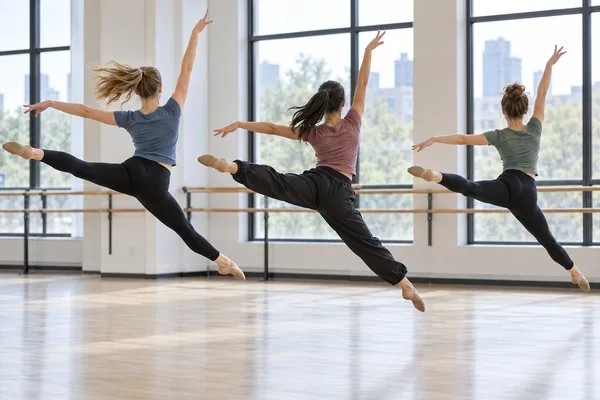
Joining a competition team at a dance studio starts with a level placement, so coaches can see where your dancer fits. From there, families commit to a full season of rehearsals, classes, and events, along with added team costs. It is a big step, and the right preparation makes it a good one.
At Turning Pointe, our STARS Competition Team is home to 31 National Championships, and we love helping new dancers find their place on it. To ask about tryouts, reach out to our team or call (407) 862-5500.
How do tryouts for the STARS competition team work?
Every competition dancer gets a level placement before joining a team. It is less about passing or failing and more about finding the group where your dancer will grow and feel confident.
Our team has more than 75 dancers, ages 4 to 18, across six levels: Twinklers, Rising STARS, Level 5, 6, and 7 STARS, and Level 8 ProStars. Younger and newer dancers often start in the earlier levels and move up as their technique and stage experience grow.
To set up a placement, call the studio. We will explain what to expect, answer your questions, and help you plan around the dates.
Many of our families make the short drive from Altamonte Springs up State Road 434 to our studio on Wekiva Springs Road in Longwood. If your dancer already takes classes with us, our teachers may have a good sense of their readiness. If you are new, we are happy to meet you and talk through the options before placement.
What rehearsal and travel commitment does the team require?
Competition team is a season-long commitment. Dancers keep up their regular technique classes, rehearse their routines, and perform at events across the year.
This season, the team attends one convention, four regionals, and one Nationals. With more than 80 competing dances per event, every dancer's attendance matters, because each routine depends on the whole group showing up ready.
We had a dancer who wanted to try out for the STARS team. Her mom actually brought in a calendar with the dates of her son's soccer practices and games, to make sure everything could fit in their schedule. We talked her through tryouts and what the time commitment looks like.
That kind of planning is exactly the right instinct. For Altamonte Springs families juggling school, work, other sports, and weekend plans around Cranes Roost Park, seeing the full season up front helps you decide with confidence. Our Nationals trip is at Disney, so it stays close to home.
What added costs come with competition dance?
Competition team has its own tuition and fees, separate from regular class tuition. Because those costs depend on the level and the number of routines, we share the details directly with each family.
When you budget, think about the full picture. Competition dancers continue their technique classes, which follow our regular monthly tuition. Team costs often cover things like competition entries, costumes for each routine, and event travel, and the exact items vary by level.
We would rather you know everything before you commit than be surprised halfway through the season. That is why we encourage parents to call and ask about competition tuition and fees before placement, so the numbers are part of the decision from the start.
You can also review our weekly class schedule to see which technique classes fit alongside team rehearsals. Seeing the full week laid out helps you plan the time and the budget together.
What skills and mindset set competitive dancers apart?
Strong technique matters, but the dancers who thrive on a competition team share a mindset: they show up, they take correction well, and they support their teammates.
Competitive dancers learn routines quickly and practice what they learned between rehearsals. They listen when a coach gives notes and try again without getting discouraged. On stage, they bring energy and focus, even after a long day of performing.
Teamwork is just as important as talent. In group routines, every dancer's timing and spacing affects everyone else. Dancers who encourage each other, keep a good attitude through busy weekends, and handle nerves with practice tend to grow the most.
Not every dancer is ready right away, and that is completely okay. Readiness is about more than skill. Some spend another season in classes building strength and confidence first, then join the team the following year feeling much more prepared.
How can parents tell if their child is ready for the team?
A dancer is usually ready when they love class, want more time in the studio, and can handle the schedule without feeling overwhelmed. Your dancer's excitement is a great sign, but the whole family's readiness matters too.
Ask yourself a few honest questions. Does your dancer take correction well? Can your family fit the rehearsals and event weekends around school and other activities? Are you comfortable with the added costs?
If the answer is yes, or mostly yes, a level placement is the next step. Our coaches will help you see where your dancer fits and what their first season would look like. We have been coaching dancers since 1996, and we take pride in supporting every team member, from the youngest Twinklers to our Level 8 ProStars.
Ready to learn more? Explore our STARS competition team, then contact Turning Pointe - A Dance Studio or call (407) 862-5500 to ask about tryouts.