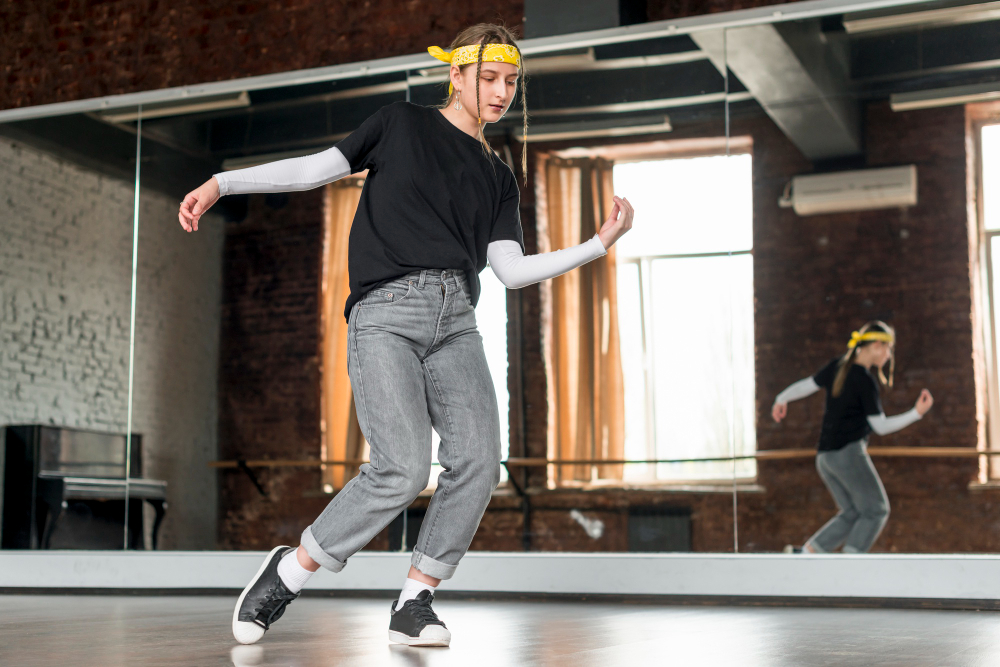
I remember the first time I saw someone truly freestyle. It wasn't on a big stage in Miami or in a music video. It was right here in a small studio in Longwood, where a dancer just closed her eyes and let the music take over. She wasn't counting steps or looking in the mirror; she was just moving. That moment changed how I viewed dance forever.
Freestyle dance is growing rapidly across Central Florida, offering a break from the rigid structure of choreography. But what exactly is it, and why are so many people trading in their routine sheets for improvisation?
This blog explores the heart of freestyle dance, where it came from, and how you can start your own journey right here in our vibrant local community.
What Exactly is Freestyle Dance?
Freestyle dance is the art of improvising movement on the spot based on how the music makes you feel. Unlike choreographed routines where every step is planned, freestyle relies on spontaneity and your personal connection to the beat.
At its core, freestyle is about freedom. It removes the pressure of memorizing counts and allows you to express emotions that words often can't capture. Whether you're feeling energetic, sad, or joyful, your body becomes the instrument to express that state of mind.
Most dancers find that the mental release is just as powerful as the physical workout. When you stop thinking about "what comes next" and start trusting your body, you enter a state of flow that is incredibly meditative and stress-relieving.
Where Did Freestyle Dance Come From?
Freestyle dance has deep roots in social dancing and jazz traditions, where improvisation was key. Before dance became heavily codified in studios, people danced together in social settings, feeding off the energy of the live music and each other.
In the 1970s and 80s, the rise of hip-hop and funk culture in cities like New York and Los Angeles exploded the freestyle scene. Street dancers developed styles like breaking, popping, and locking—all of which rely heavily on improvisation and battling, where dancers respond to their opponent's moves in real-time.
Electronic dance music (EDM) culture later brought its own flavor to freestyle, emphasizing continuous movement and "shuffling." Today, you can see the influence of these pioneers everywhere, from music festivals to local jams here in Seminole County.
Common Freestyle Techniques and Styles
While freestyle means "free," it often draws from a vocabulary of established dance techniques. You don't need to be a master of all of them, but knowing the basics helps you build your own style.
Hip-Hop Freestyle: This is perhaps the most well-known form. It incorporates bounces, rocks, and grooves. It's grounded and rhythmic.
House Dance: Born in Chicago clubs, this style focuses on complex footwork and a fluid torso, usually set to house music with a steady 4/4 beat.
Popping and Locking: These funk styles involve contracting muscles to create a "pop" or holding a specific position (locking) to accentuate the music.
The magic happens when you blend these. You might use the footwork of house dance with the attitude of hip-hop. In a dance studio Longwood residents visit, you'll often see students mixing genres to create something entirely new.
Why is Freestyle Dance Good for You?
Freestyle dance improves your physical health, mental well-being, and social connections in ways that structured exercise often can't.
Physical Benefits: Since you'ren't stopping to check your place in a routine, freestyle often keeps your heart rate up for longer periods. It improves agility because your body must react instantly to your brain's commands.
Mental Benefits: It forces you to be present. You can't worry about your grocery list when you're trying to catch a beat drop. This focus acts as a powerful form of stress relief.
Social Benefits: Freestyle is inherently social. "Cyphers" (circles where dancers take turns in the center) build a massive sense of community and support.
Freestyle Dance in Florida: The Local Scene
Florida has a unique dance flavor, influenced heavily by Miami bass, Caribbean rhythms, and a strong breakdancing history. But you don't have to drive down to South Beach to find it.
Central Florida, including areas like Orlando and Longwood, is home to a thriving community. We see a mix of styles here that reflects our diverse population. From the b-boy jams in downtown Orlando to the contemporary improv sessions in local studios, the scene is welcoming and active.
Local landmarks like Lake Eola often host open practice sessions, and the influence spills over into our local neighborhoods. Whether you're in Wekiva Springs or right here near Reiter Park, the rhythm of Florida is distinct—it's fast, fun, and deeply soulful.
How Do I Get Started with Freestyle?
Starting can feel intimidating, but the barrier to entry is actually very low. Here is a simple roadmap for beginners:
- Listen to Music: Put on a playlist with a strong beat. Don't dance yet; just listen. Find the bass, the snare, and the melody.
- Start Small: You don't need to do backflips. Start by nodding your head or tapping your foot. Let the movement grow from there.
- Take a Class: While freestyle is improv, taking structured dance classes gives you the "vocabulary" you need to write your own sentences.
- Find Your Space: You need a safe, non-judgmental environment to experiment. A dance studio Longwood locals love, like Turning Pointe, offers the perfect floor and atmosphere to find your footing.
Practice is key. Try to set aside just 10 minutes a day to move without a plan. You'll be surprised at how quickly your confidence grows.
Ready to Find Your Rhythm?
Freestyle dance is more than just movement; it's a way to connect with yourself and your community. It offers a unique blend of physical exercise and creative expression that is hard to find elsewhere.
Whether you're looking to master the latest hip-hop moves or just want a fun way to stay active, we are here to help you take that first step. Our family-oriented environment is perfect for exploring your potential.
Contact Us
Ready to start dancing? Contact Turning Pointe - A Dance Studio at (407) 862-5500 today to learn more about our classes and schedule. We can't wait to see you on the dance floor!