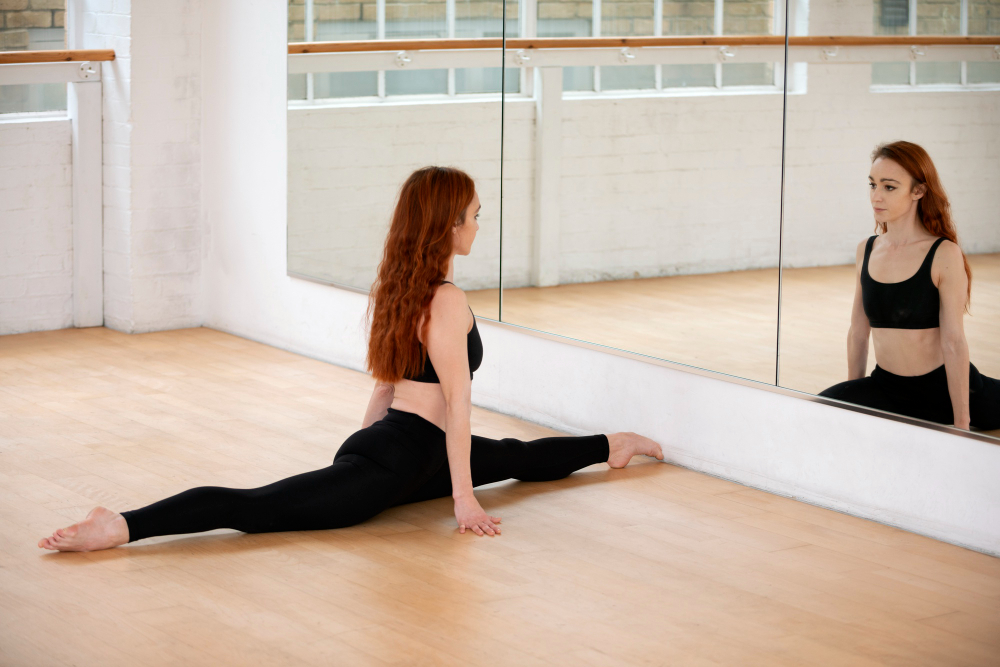
Achieving the splits is a major milestone for dancers and non-dancers alike. Whether you live near Sanlando Springs or over in Forest City, many new students walk into our studio asking how long it takes to get all the way to the floor. While there's no magic shortcut, consistent training in our dance classes in Altamonte Springs combined with home practice, will get you there.
What Muscles Do You Need to Stretch for Splits?
Achieving full splits requires flexible hamstrings, hip flexors, glutes, and adductors (inner thigh muscles). For a front split, your front leg demands hamstring flexibility, while the back leg relies on loose hip flexors. Side splits require open hips and flexible inner thighs. Without targeting all four muscle groups, your hips won't sit flush against the floor.
Anatomy and Genetics
In our 25+ years of teaching dance, we've learned that everyone’s skeletal structure is different. The shape of your hip socket can influence how easily you perform a side split. However, muscle flexibility is adaptable. While age plays a role—children typically gain flexibility faster than adults—consistency beats age every time. We see adults in their 30s and 40s achieve their splits after 6 to 12 months of dedicated practice.
How Should You Warm Up Before Stretching?
Never stretch cold muscles, as this significantly increases your risk of injury and tears. Spend 10 to 15 minutes raising your body temperature until you break a light sweat. In Central Florida heat, your muscles might feel warm simply from being outside, but you still need to increase blood flow to the deep tissue before attempting deep stretches.
Essential Warm-Up Moves
- Light Cardio: Jogging in place or jumping jacks for 3-5 minutes.
- Leg Swings: Swing legs front-to-back and side-to-side to loosen the hip joint.
- Torso Twists: Rotate your spine gently to prepare your core.
Which Stretches Help You Get Your Splits?
The most effective routine isolates the specific muscle groups used in a split before attempting the full position. Hold each of these stretches for 30 to 60 seconds. Do not bounce, as this triggers a protective reflex in the muscle that actually makes it tighter. Breathe deeply and sink a little lower with every exhale.
Hamstring Stretches
Tight hamstrings are the most common barrier to front splits.
- Seated Forward Fold: Sit with legs extended straight. Reach for your toes with a flat back.
- Standing Toe Touch: Keep knees soft (slightly bent) to focus the stretch on the muscle belly, not the tendon behind the knee.
Hip Flexor Stretches
If your back leg stays bent in a front split, your hip flexors are too tight.
- Low Lunge: Step one foot forward into a lunge, dropping the back knee to the floor. Push your hips forward.
- Pigeon Pose: From a plank, bring one knee forward toward your wrist. Extend the other leg back. This opens the outer hip and glute.
Groin and Inner Thigh Stretches
These are essential for the straddle (middle) split.
- Butterfly Stretch: Sit with the soles of your feet together. Gently press your knees toward the floor using your elbows.
- Wide-Legged Forward Fold: Stand with feet wide apart and fold forward, bringing your hands to the floor.
How Often Should I Train for Splits?
Train for flexibility 3 to 4 times per week rather than every single day to allow muscles to recover. Progressive overload applies to stretching just like weightlifting; you must gradually increase the intensity or duration of the stretch to see change. If you stretch casually once a week, you will maintain your current range of motion but likely won't improve it.
Sample Schedule
- Monday: 45-minute Acro or Ballet class (Deep stretching included).
- Wednesday: 20-minute home stretching session focusing on hamstrings.
- Friday: 20-minute home stretching session focusing on the hips.
- Saturday/Sunday: Rest or light yoga.
What Mistakes Stop Progress?
The biggest mistake we see is pushing through sharp pain instead of discomfort. Discomfort feels like a dull ache or tension; sharp pain feels like stabbing or electricity and indicates potential injury. Another common error is holding your breath. Your muscles need oxygen to relax, so holding your breath causes them to tense up, fighting the stretch.
Common Pitfalls
- Skipping warm-ups: This leads to strains that can take 4-8 weeks to heal.
- Poor alignment: In a front split, your hips should be square (facing forward), not open to the side.
- Impatience: Trying to force your hips to the floor before they are ready can result in a hamstring tear.
Is It Safe to Train for Splits at Home?
Yes, training at home is safe if you listen to your body and use props to support your weight. Yoga blocks are excellent tools that cost between $10 and $20. Place a block under your front hamstring or hands to support yourself, allowing you to relax into the position without straining. If you feel persistent pain, consult a physical therapist.
When to Seek Help
If you have a history of hip injuries or experience popping sensations accompanied by pain, stop immediately. Our instructors in dance classes Altamonte Springs are trained to spot alignment issues. Sometimes a correction as simple as rotating your back foot can make a difficult stretch accessible.
Why Do Dancers Need to Do Splits?
Splits increase the range of motion required for high kicks, leaps (grand jetés), and floor work. Beyond the aesthetic appeal that judges look for in competitions, flexibility improves overall posture and reduces back pain. A dancer with full splits moves with more fluidity and freedom than one who is restricted by tight muscles.
Real Success Stories from Our Studio
We see progress every semester in our studio. We recently had a teen student from the Spring Valley area who started with her hips 12 inches off the floor. She committed to stretching for 15 minutes every night while watching TV. It took eight months, but she eventually got flat on the floor.
Just like navigating I-4 traffic during rush hour, flexibility training requires patience. You can't rush the process, but if you keep moving forward, you will arrive at your destination.
Start Your Flexibility Training Today
Achieving your splits takes time, but the confidence you gain is worth every minute of stretching. Start with a solid warm-up, focus on your form, and stay consistent. If you're looking for professional guidance to help you reach your goals safely, we are here to help.
Ready to improve your flexibility and technique? Contact Turning Pointe - A Dance Studio at (407) 862-5500 to schedule your first class.