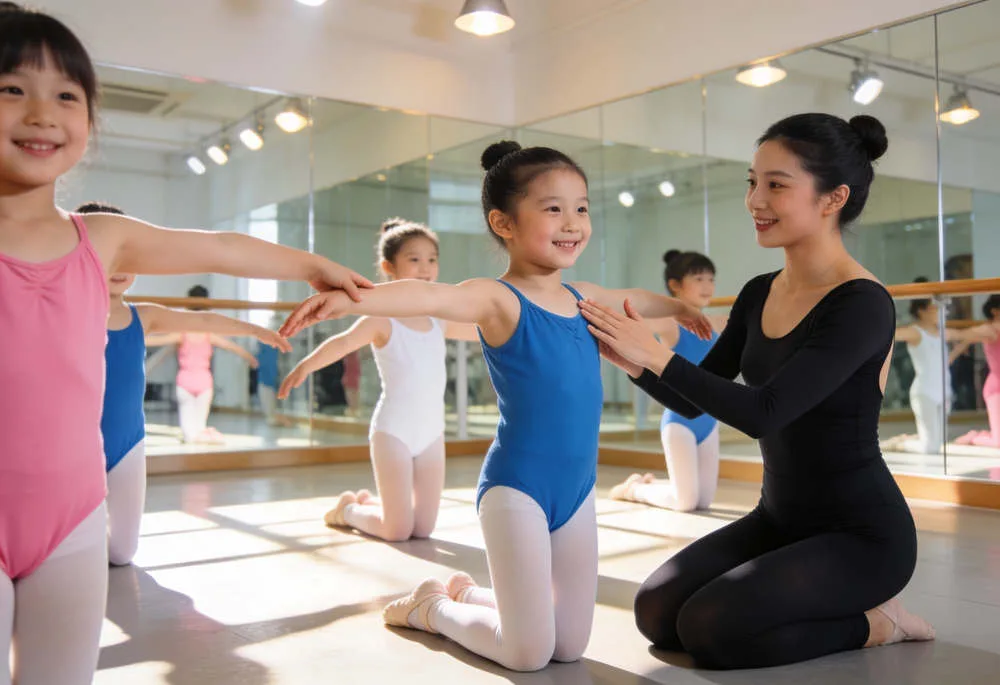
The right first dance class for your child depends on their age, their personality, and what you want them to get out of the experience. A shy four-year-old and a high-energy eight-year-old are starting from different places, and the class that sets one child up for a decade of training might overwhelm or bore the other. The good news is that most styles share the same physical foundation, and the first year of any discipline is really about body awareness, coordination, and learning to move with intention. Turning Pointe - A Dance Studio works with families across Altamonte Springs and the surrounding area to find the right starting point for each child. Contact Turning Pointe to ask about classes and enrollment or call (407) 862-5500 and someone will help you figure out where your child fits.
Matching style to age and personality
Families in Longwood often ask whether ballet is still the right starting point for young children or whether other styles are just as solid a foundation. Ballet remains one of the most comprehensive introductions to movement training because it addresses turnout, alignment, core engagement, and spatial awareness in a structured way that other styles build on later. A child who starts in ballet at four or five and moves into jazz or hip hop at seven or eight tends to pick up the new style faster than a peer who started there directly, because the foundational vocabulary is already in the body. That said, a child who has zero interest in ballet and will thrive in a hip hop class is better served by starting where the energy is and building from there.
For families near Wekiva Springs whose children are in the five-to-seven range, the personality consideration often matters more than the style. A child who is naturally introverted and needs a slower, more structured entry point tends to do well in a ballet or acro class where the progression is clear and incremental. A child who wants to move fast, improvise, and perform tends to light up in jazz or hip hop, where the music and the energy of the style match what they already bring to the room. Neither path is wrong. Both lead to real physical development when the teaching is quality.
Acrobatics deserves its own mention for families in Casselberry and similar communities looking for something that bridges dance and athletic training. Acro builds upper body strength, flexibility, balance, and proprioception, the body's sense of where it is in space, through conditioning and skills work that is genuinely demanding at any age. Children who come in with gymnastics backgrounds often find acro a natural fit, and those without gymnastics experience develop the foundational strength quickly when the progression is appropriate for their level.
Dance as elite athletics, not just performance art
One of the things parents discover after a few months of training is that dance is physically demanding in ways that were not obvious from the outside. A serious ballet or jazz class is a full-body workout. It develops core stability in a way that translates directly to other sports, builds the proprioceptive awareness that reduces injury risk in athletics generally, and requires the kind of kinesthetic memory that only comes from repetition and physical attention. Children who train in dance consistently tend to be more body-aware athletes in whatever else they do, whether that is soccer, swimming, or gymnastics.
This is worth naming early because parents who enroll a child thinking of dance as a creative outlet sometimes discover they are also building a young athlete. That combination, physical rigor and artistic expression in the same discipline, is part of what makes serious dance training distinctive among extracurricular activities.
Recreational versus competitive: know the difference before you enroll
Most studios offer two tracks, and understanding the difference before the first class prevents a mismatch in expectations. Recreational dance is year-round training with a recital at the end of the season. It is the right fit for most children starting out, and for families who want the developmental benefits of dance training without a travel or performance competition schedule.
Competitive dance adds regional and national competition, additional rehearsal hours, costume expenses, travel, and entry fees on top of the base tuition. It is a meaningful commitment in time and budget. Some children thrive in the competitive environment and grow faster because of it. Others do their best work in recreational classes where the pressure structure is different. Neither is more legitimate than the other, but starting in recreational and moving to competitive if the child develops the interest and the drive is a lower-risk sequence than starting competitive with a child who has never been in a studio before.
Enrollment timing and what to expect in 2026
Fall enrollment at most studios in the Altamonte Springs area opens in spring, and the classes that fill first are the beginner and intro-level sessions where most new families are starting. If your child is starting in the fall season, looking at class options and reaching out in March or April puts you ahead of the enrollment rush rather than sorting through what is left in August. Online registration and clearly published schedules are the baseline expectation in 2026, and a studio that makes those easy to navigate is signaling something about how it manages the rest of the parent experience as well.
If you are ready to find the right dance classes for your child and want help matching their age and personality to the right style and track, Turning Pointe is a good place to start that conversation. Call (407) 862-5500 or reach out to Turning Pointe - A Dance Studio to ask about the current class schedule and find the session that fits your family before fall enrollment fills.